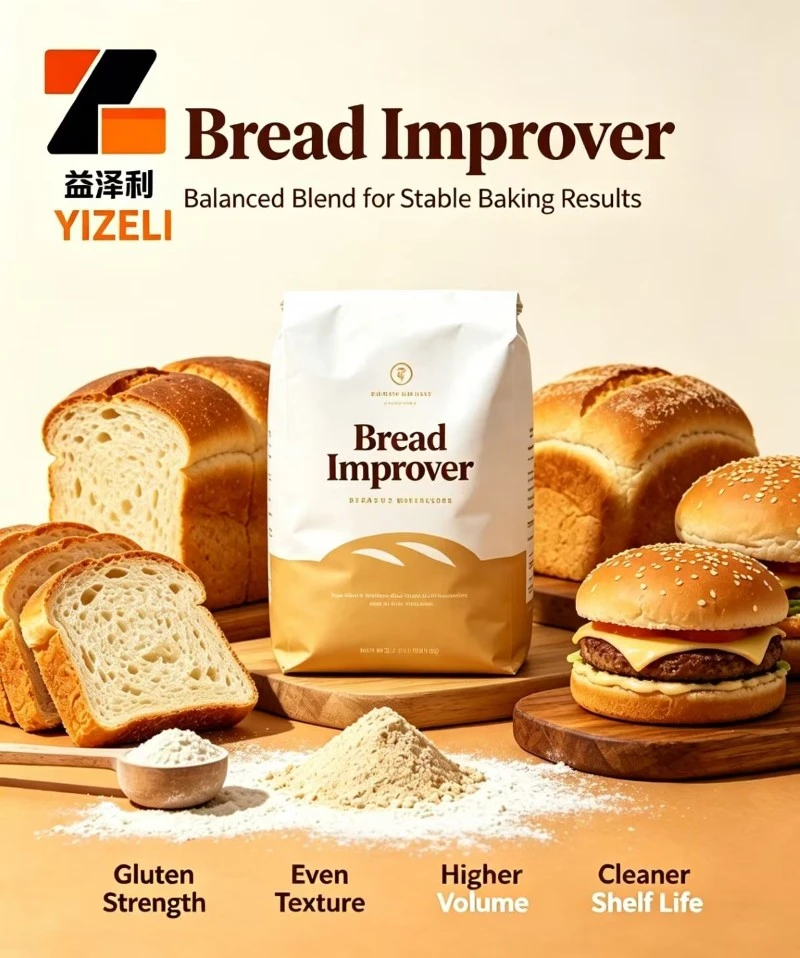
If you have ever compared two loaves from the same bakery, made on different days, and noticed one was visibly larger, softer, and more evenly shaped, the difference often comes down to whether a bread improver was used-and which one.
Bread improver is not a single ingredient but a carefully balanced blend of emulsifiers, enzymes, oxidising agents, and sometimes processing aids. Each component addresses a specific challenge in dough handling or finished product quality, and the synergy between them is what makes improvers more effective than individual additives used in isolation.
The emulsifier component-often SSL, DATEM, or GMS-provides dough strengthening or crumb softening, depending on the formulation. Enzymes like amylase break down damaged starch into fermentable sugars, improving yeast activity and crust colour. Xylanase modifies arabinoxylans in the flour, making dough more extensible and easier to shape. Oxidising agents such as ascorbic acid reinforce the gluten network, compensating for seasonal variations in protein quality.
What many bakers appreciate about a well-designed improver is its ability to reduce the impact of flour variability. Mills produce flour with consistent specifications on paper, but protein strength, enzyme activity, and starch damage can differ from batch to batch. An improver with a balanced enzyme and emulsifier package smooths out those fluctuations, allowing the production line to run with fewer interruptions and more predictable outcomes.
Practical considerations matter when selecting an improver. The dosage required depends on flour quality, dough hydration, and processing equipment. High-speed lines with short mixing times typically benefit from a stronger emulsifier package, while slower, more traditional processes may prioritise enzymes for flavour and crust development. Some improvers are formulated for specific applications-pan bread versus hamburger buns versus frozen dough-and using the wrong type can lead to disappointing results.
Another aspect worth noting is that improvers are not a substitute for good flour. They compensate, they adjust, and they enhance, but they cannot overcome flour that is fundamentally poor in quality. The best results come from starting with decent flour and using an improver to achieve consistent excellence.
Storage and handling also deserve attention. Most improvers contain enzymes and fats, both of which degrade under heat or humidity. Keeping them in a cool, dry area with proper sealing prevents loss of activity and ensures that each batch performs as expected.
For bakeries aiming to reduce waste, maintain consistent product quality across multiple shifts, and simplify their ingredient inventory, a formulated bread improver offers a convenient and proven tool. It packages expertise into a single addition, saving time in formulation and troubleshooting while delivering results that consumers notice-better volume, softer crumb, and longer freshness.
Bread improver may not be glamorous, but its contribution to daily production is substantial. When selected thoughtfully and used correctly, it turns variable inputs into dependable outputs, one batch at a time.